Platform Net worth and income
Net worth and income
Everything you own, owe and earn, on one balance sheet.
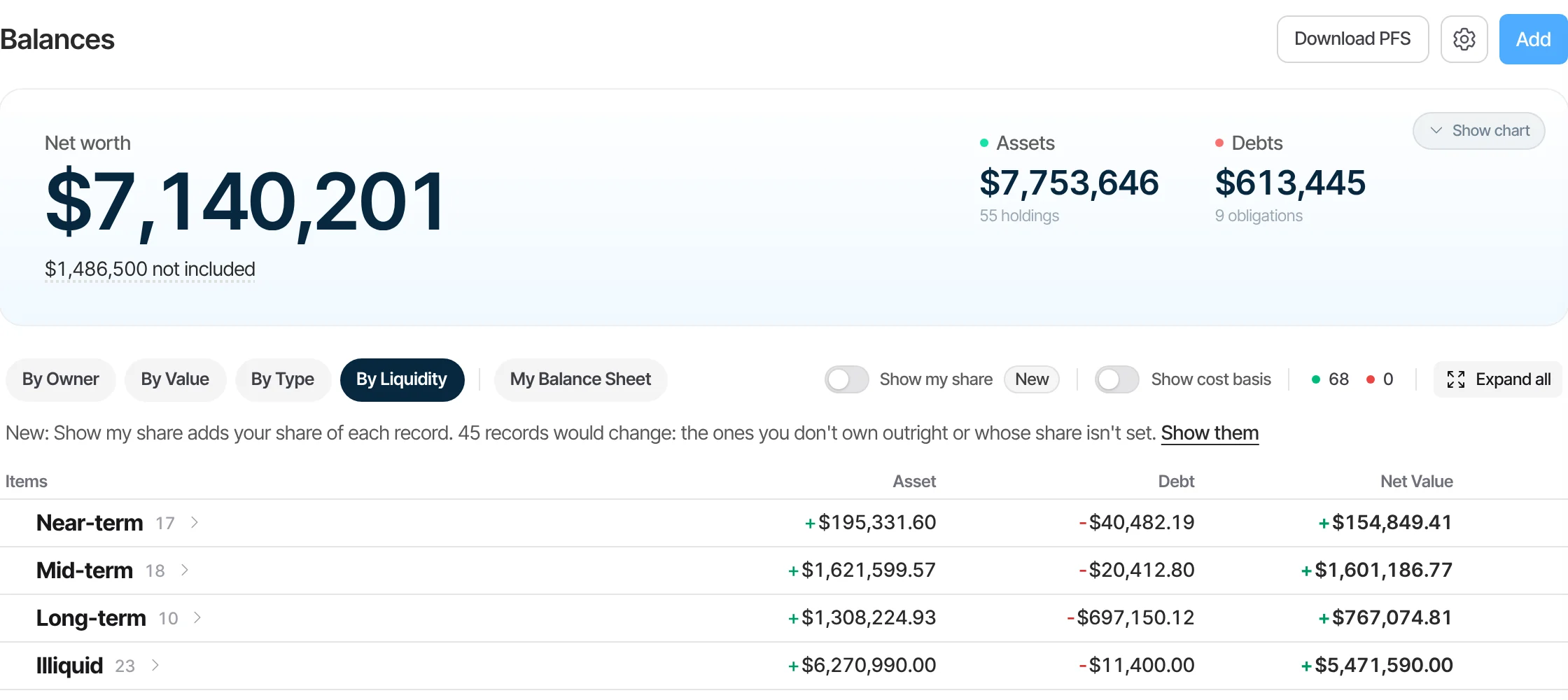
An aggregator adds up balances. Olomon keeps what’s behind each one: who owns it and in what share, where its value came from, and the debts and policies tied to it. Net worth you can explain, not just add up.
- Who owns it
- Each owner and their share, including a trust or a company, so each person can see their own part.
- Where its value came from
- A feed, a statement, public property records or a named person, with the date.
- What it's tied to
- The loans it secures and the policies that insure it, so equity and protection sit with the asset.
The whole estate
Not just the accounts a bank can see.
Twelve kinds of asset and seven kinds of debt, each with the details that matter for it. The family business and the fund commitment sit on the same balance sheet as the checking account.
What it holds
- Bank and brokerage accounts
- Retirement accounts
- Homes and other property
- Private companies
- Private equity, venture and hedge funds
- Real estate funds
- Carried interest
- Private loans
- Deferred compensation
- Intellectual property
- Cash-value life insurance
- Art and valuables
- Vehicles
- Crypto
What it owes
- Mortgages
- Home equity lines
- Portfolio lines of credit
- Auto and student loans
- Credit cards
- Tax liabilities

Where values come from
Every value, from somewhere you can name.
Connected accounts
Banks and brokerages connect through Plaid, Finicity or MX, and their balances, holdings and transactions sync.
Property by address
Enter an address and the home gets a market estimate, its last sale and public-record details, refreshed on a schedule.
Crypto
Enter holdings in ten major cryptocurrencies and they're priced daily after market close.
Documents and by hand
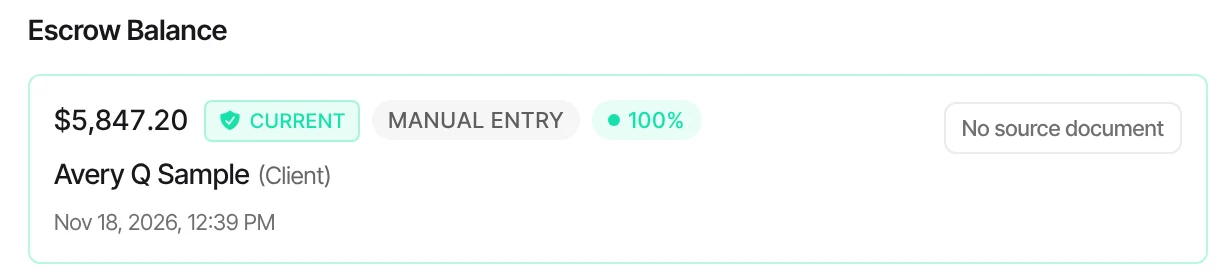
Statements are read into proposed values, and anything else can be entered by hand, with who entered it and when.
A value nobody has given is marked not recorded, never guessed. Hand-entered values that go stale are flagged for an update.
Ways to see it
The same balance sheet, the way you need it.
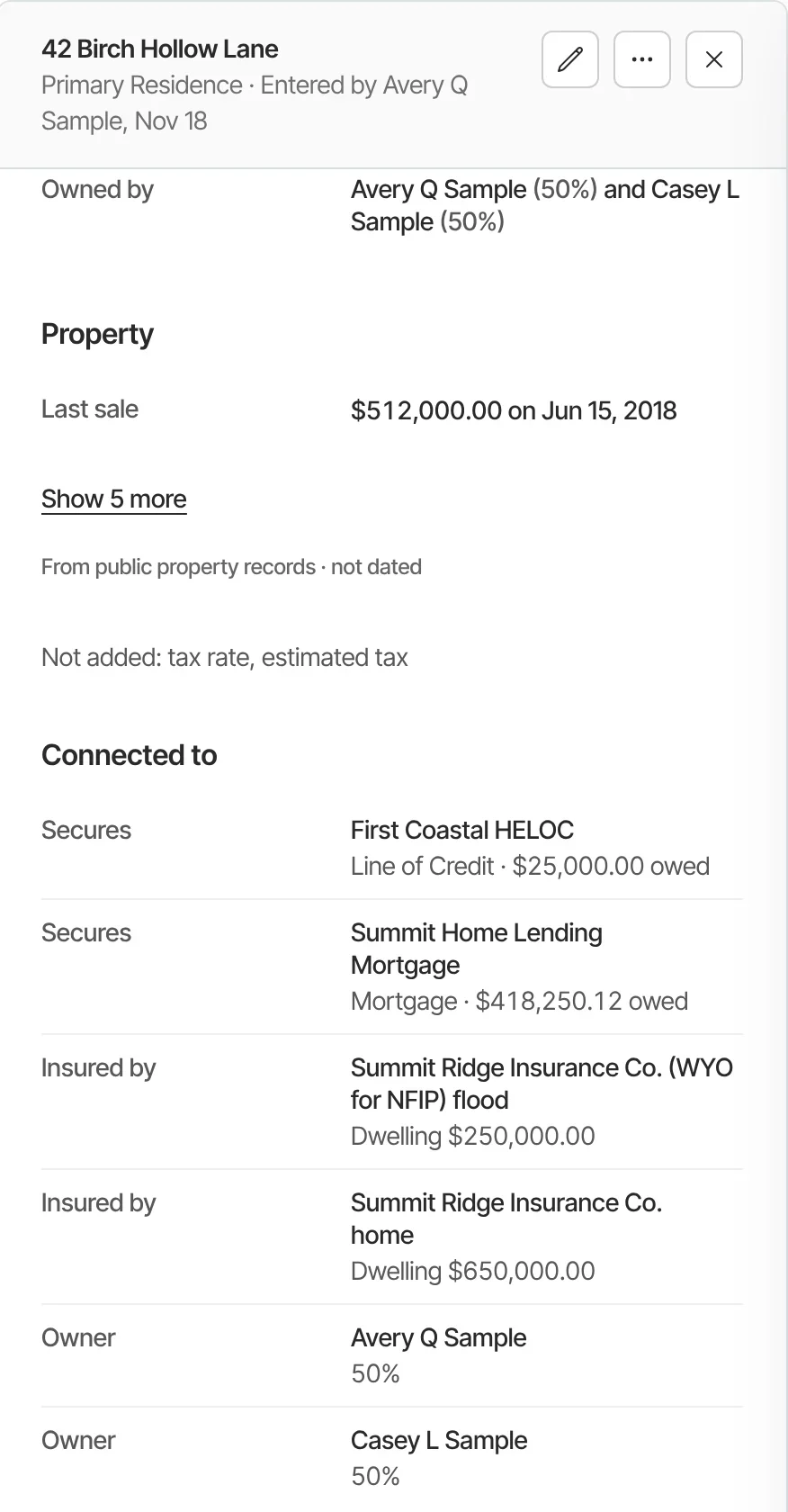
Group it by who owns it for an estate conversation, by liquidity for a cash question, or by type for the accountant.
- By owner, value, type or liquidity
- Your share of what you co-own
- Cost basis beside value
- Net worth over time
- Values hidden with one keystroke
- The balance sheet as a PDF
Debts
A loan is more than its balance.
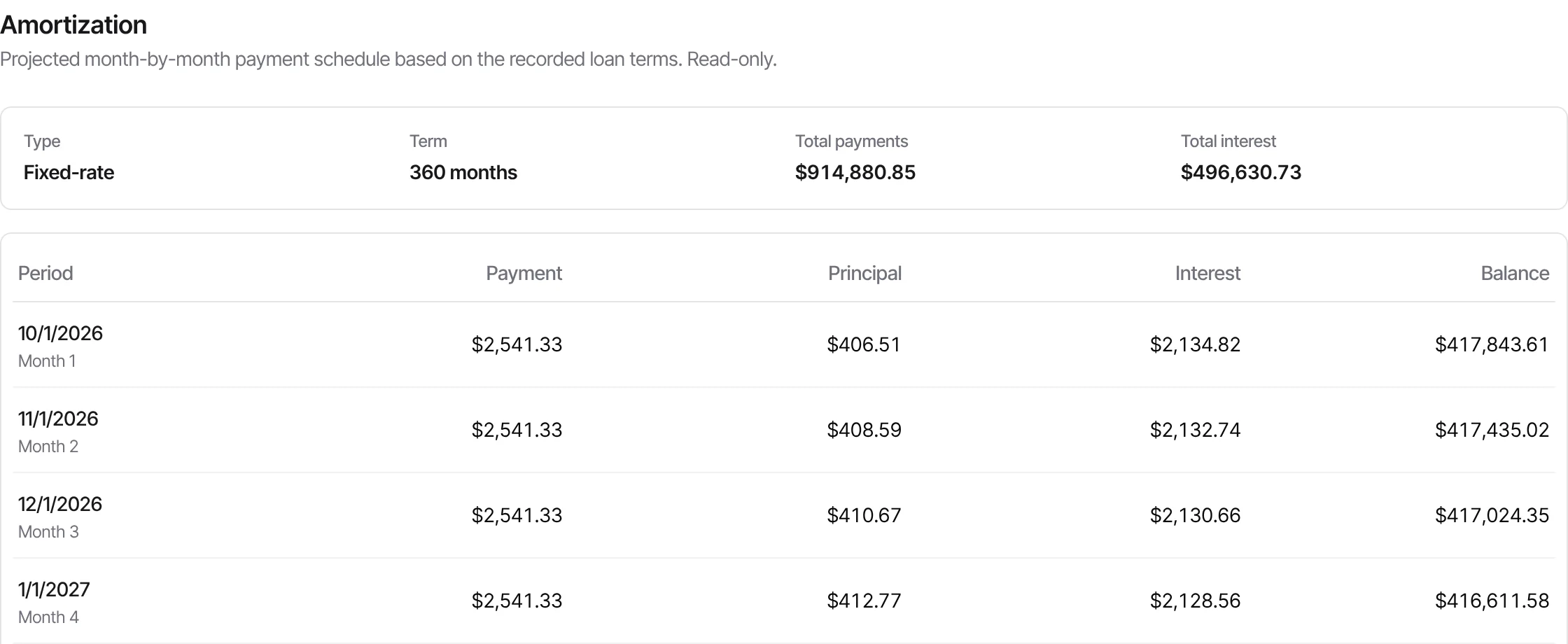
- Terms, rate, escrow and payments
- A month-by-month amortization schedule
- Interest and principal paid, year by year, with their source
- The property each loan secures
Income
What comes in, and where it comes from.
Olomon isn’t a budget. It records the income a family’s wealth produces and the payments that keep coming, tied to the assets and entities behind them.
Income sources
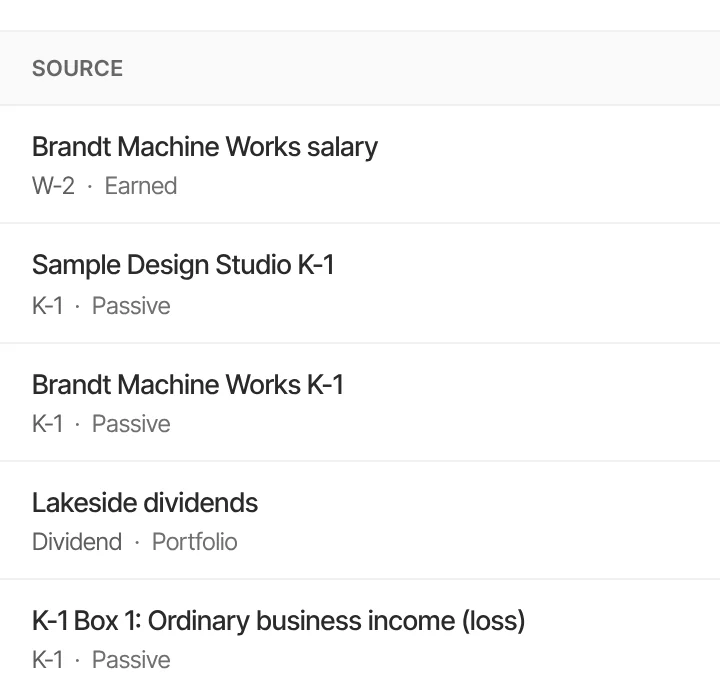
Salary, distributions, rent, royalties and dividends, each with who receives it, where it comes from, how often and its tax character.
Recurring payments
Olomon spots payments that repeat. Confirm or reject each one, or add your own.
Transactions
Synced transactions with categories, split across more than one when they need to be.
Connected in the record
Net worth is only as good as what’s behind it.
Ownership and entities
Every asset and debt has its owners and their shares, so net worth can be shown person by person.
Taxes and private investments
Holdings keep their lots and basis, and private investments their rounds and paperwork.
Record intelligence
Each value says where it came from and whether it's current, and stale ones are flagged.
See a whole balance sheet, explained.
In the demo we walk through a sample household’s net worth, from the total down to where each value came from. There’s nothing to send beforehand.