Platform Ownership and entities
Ownership and entities
Who owns what, through which entity, in what share.
Most financial tools list accounts. Olomon records the structure around them: the trusts, LLCs, partnerships and foundations that hold things, the people in each role, and each owner’s share, counted once.
Why it matters
A balance tells you what it’s worth. It doesn’t tell you whose it is.
Estate plans, tax returns and a family’s own sense of what it has all depend on three answers that a list of accounts leaves out.
- Who actually owns it?
- A person, two people, a trust, an LLC or a foundation. Each owner is named on the record.
- Through what?
- Holdings sit under the entity that owns them, so a trust's assets show up as the trust's.
- In what share?
- Each owner's percentage is recorded, and net worth counts the household's share once.
Who owns what
Each holding with its owners and their share
42 Birch Hollow Lane
Primary residence · $785,000
- Avery Q. Sample50%
- Casey L. Sample50%
Cedar Ridge land parcel
Land · $300,000
- Sample Family Foundationentity50%
- Avery Q. Sample50%
Sample art collection
Valuables · $85,000
- Sample Family Trustentity100%
Illustrative view based on Olomon capabilities. Not an actual app screen. Values from Olomon's fictional sample household.
Every structure
Trusts, LLCs, partnerships and foundations, as they really are.
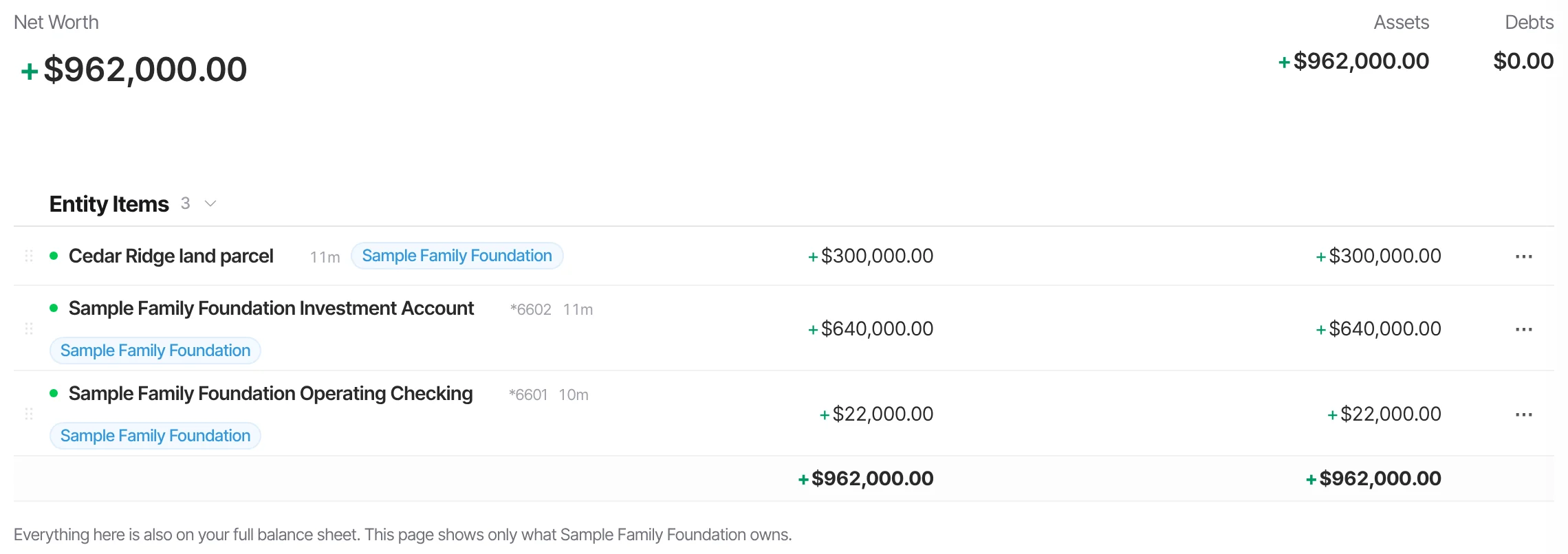
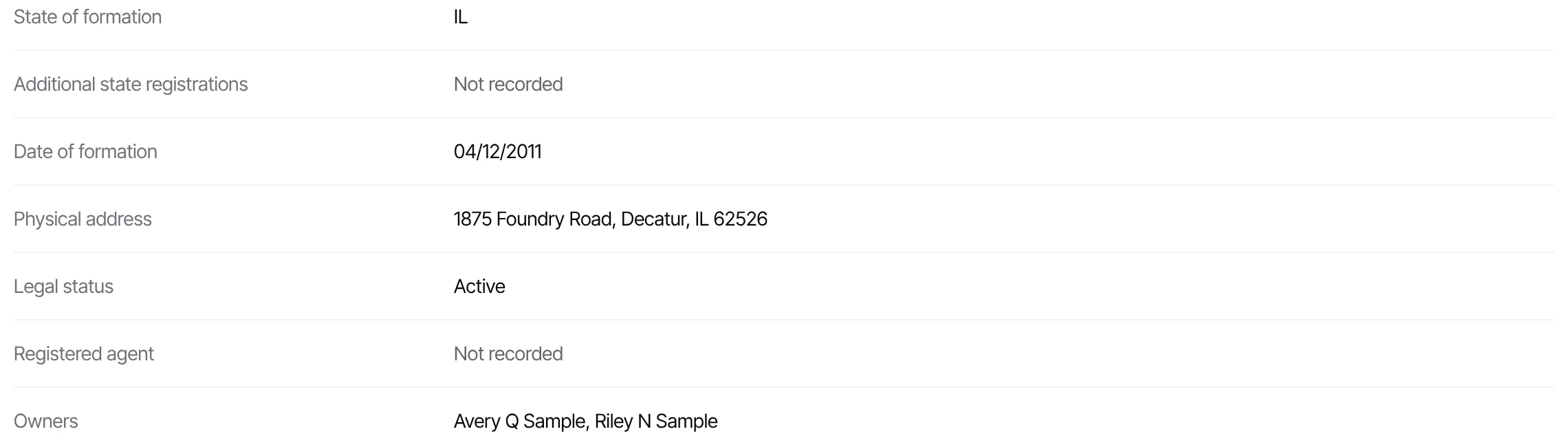
Each entity has its own page: what it holds, its details, its files, its tasks and its history. Everything it holds is also on the household’s full balance sheet, so nothing is counted twice.
Businesses
- Sole proprietorship
- Partnership
- LLC
- S corporation
- C corporation
Trusts
- Living
- Revocable
- Irrevocable
- SLAT
- ILIT
- GRAT
- Dynasty
- Charitable remainder
- Charitable lead
- QTIP
Who and what each one records
- Grantors
- Trustees
- Beneficiaries
- Owners
- State registrations
- GST-exempt status
- Charitable vehicles
Shares
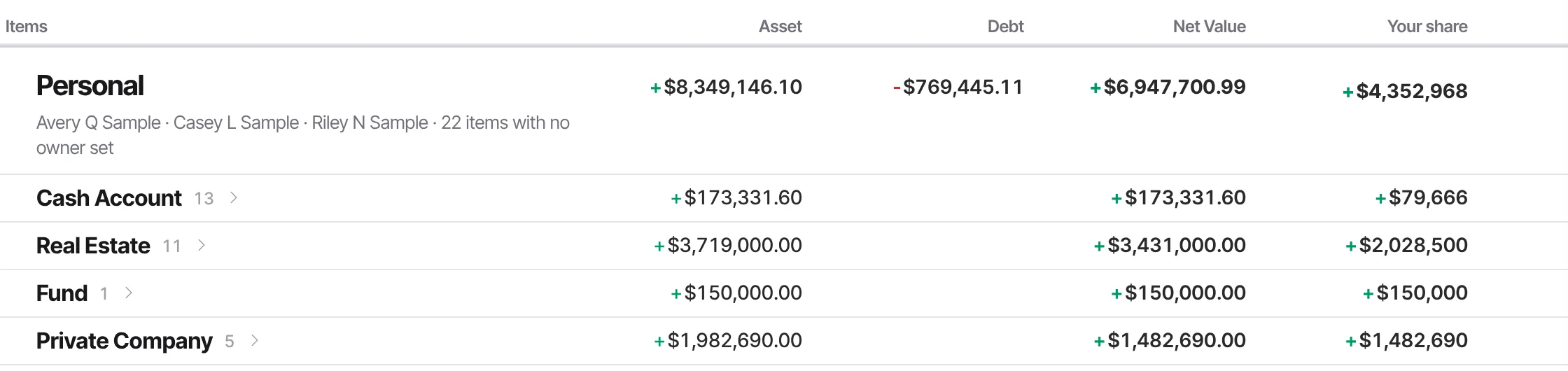
Every owner’s share, counted once.
A house owned 50/50, a parcel shared with the family foundation, a partnership split between a company and a person. Net worth counts the household’s share of each, and says plainly what it leaves out.

The people
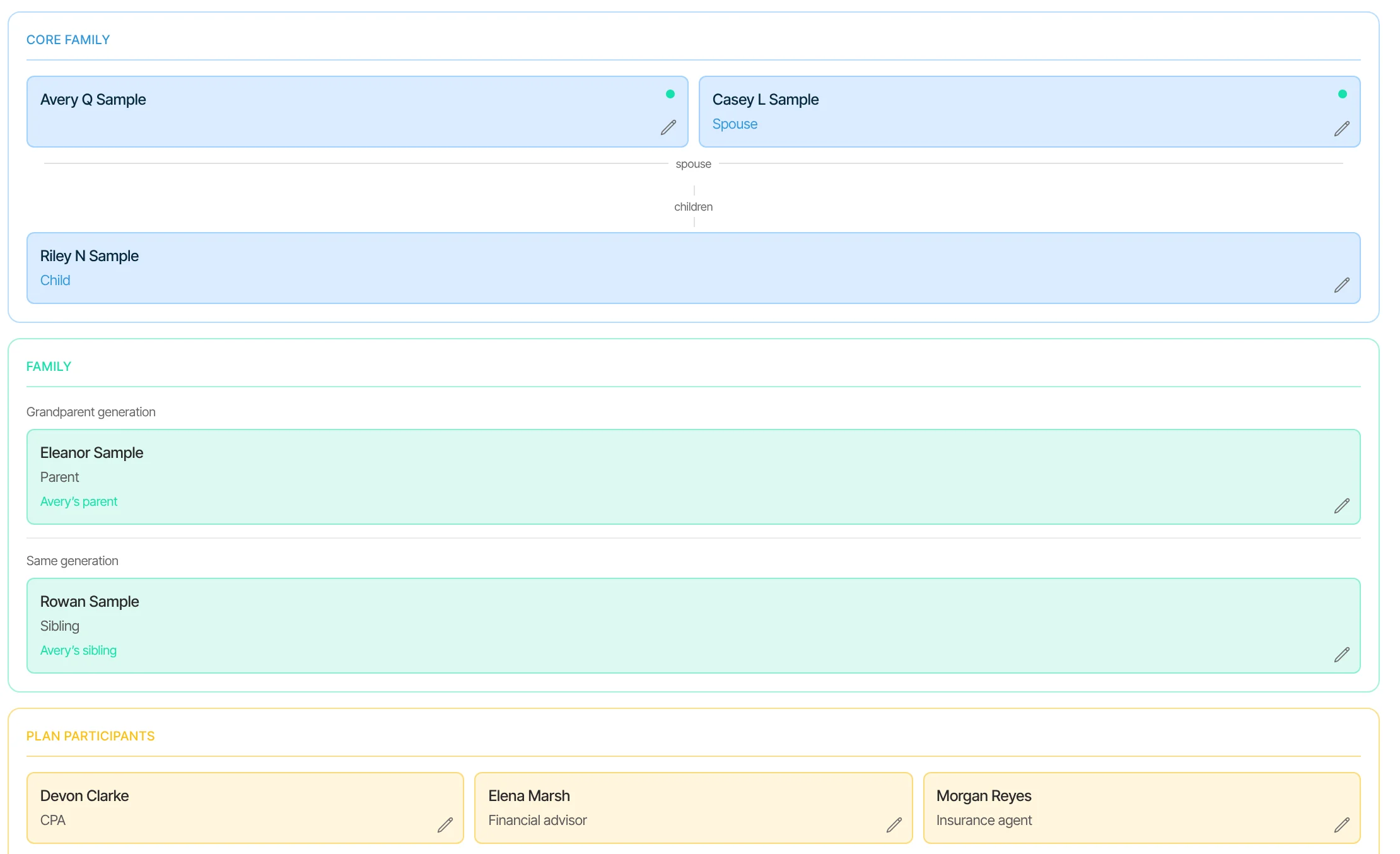
Who’s who to whom.
Spouses, children, parents and siblings, and the professionals around them: the CPA, the advisor, the insurance agent. The household graph draws it from any person in the record, so an estate question starts from the family as it actually is.
An estate attorney or CPA can be invited to a single project, such as a trust restatement, and work there without seeing the rest.
When it matters
The structure doesn’t leave with the person who built it.
The trusts, the companies and who owns what are in the record, not in one person’s head. Name a legacy contact: if you stop signing in and don’t respond to our check-ins, Olomon sends them your balance sheet, as long as your subscription is active.
Connected in the record
Ownership makes the rest of the record make sense.
Documents to facts
A K-1 is read into the record and matched to the partnership or company it came from, and each entity keeps its own files.
Net worth and income
Each owner's share flows into net worth, and income from an entity keeps where it comes from.
Insurance and protection
Policies name the people and property they cover, so ownership and protection sit side by side.
See your family’s structure in one place.
In the demo we walk through a sample household’s trusts, companies and shared holdings. There’s nothing to send beforehand.