Platform Taxes and private investments
Taxes and private investments
Tax season, with the paper trail already kept.
Olomon knows which tax documents should arrive, reads the K-1s that do, and keeps the cost basis, rounds and paperwork behind every private investment. When the accountant asks, the answer is already on the record.
Every tax year
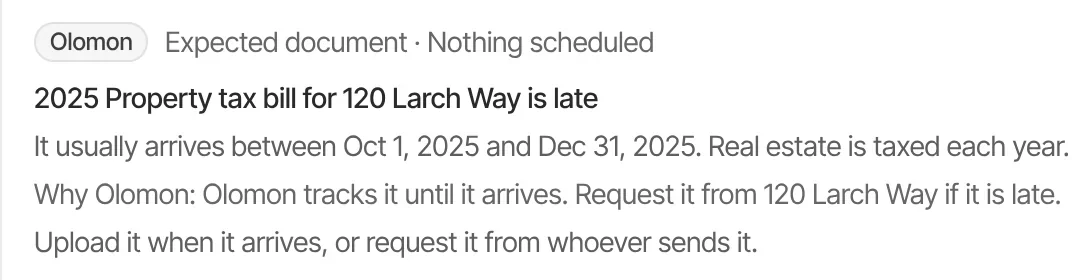
It knows what should arrive.
From the accounts, properties, loans and investments on record, Olomon lists the forms and statements the household should receive for the year, and marks each one not yet due, due, received or late. A late one shows when it usually arrives and how to get it.

K-1s
A K-1 doesn’t stop at the file drawer.
Olomon reads it beside its page, matches it to the partnership or LLC it came from, and proposes the income it reports. Nothing changes until a person accepts the review, and every value keeps its source.
Step 1
Read beside its page
A partner's K-1, read into proposed values
Documents to facts
Step 2
Matched to the business
The LLC or partnership it came from
Ownership and entities
Step 3
Proposes income sources
One for each income line, added when the review is accepted
Net worth and income
Step 4
Keeps its source
Each value points back to the K-1 it came from
Evidence and provenance
Private investments
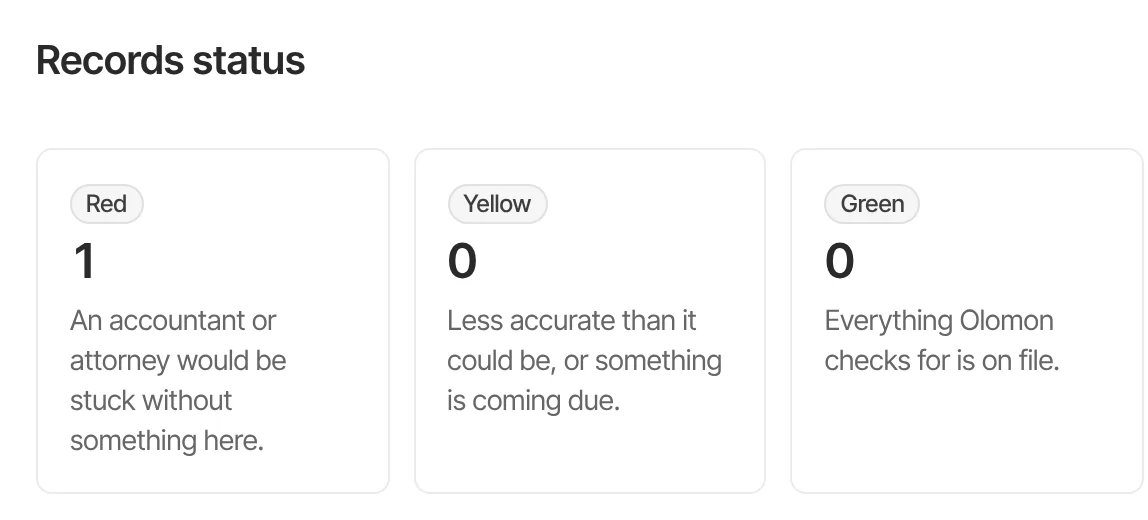
Every private investment, red, yellow or green.
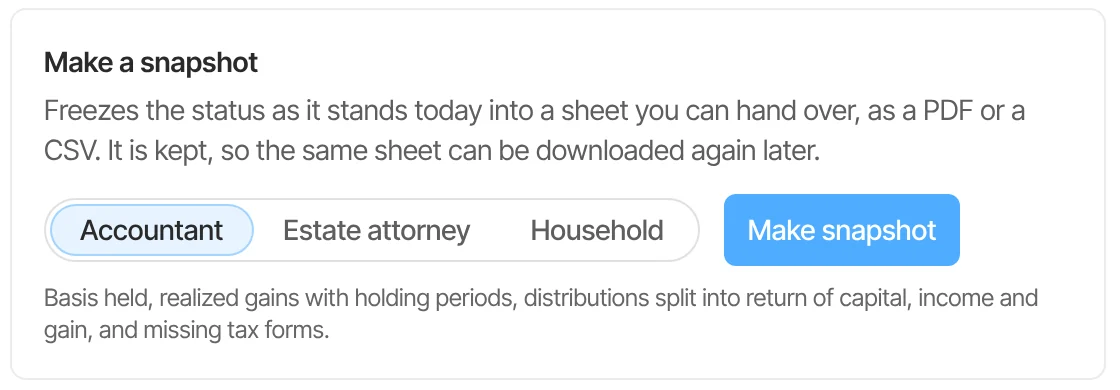
Each one shows what’s known, what still needs collecting, what’s unknown, and the next thing to get. When it’s time to hand it over, freeze it into a dated snapshot as a PDF or a CSV, for the accountant, the estate attorney or the household. It’s kept, so the same sheet can be downloaded again later.
What an accountant’s snapshot holds
- Basis held, with holding periods
- Realized gains
- Distributions split into return of capital, income and gain
- Tax forms that are still missing
Private company equity
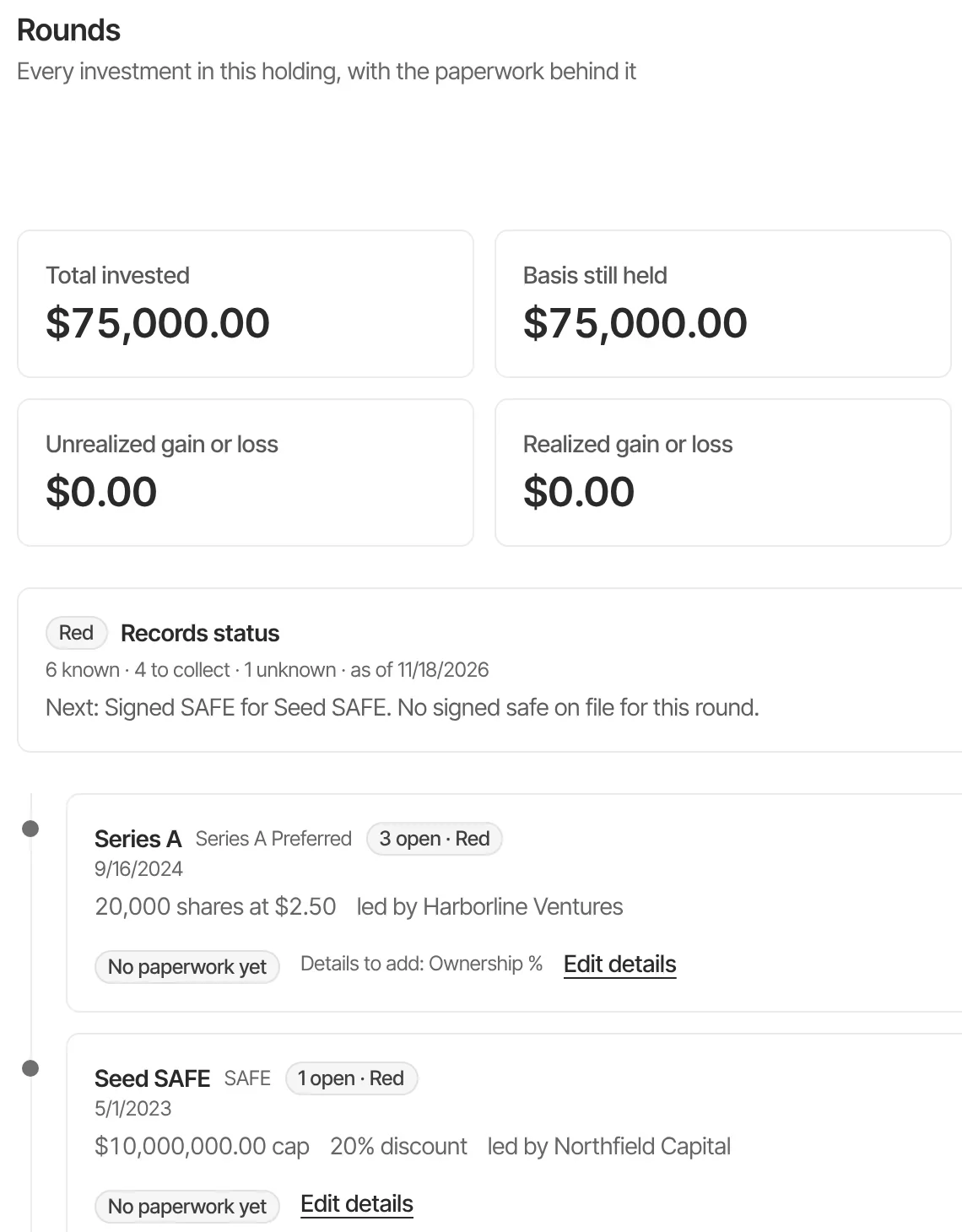
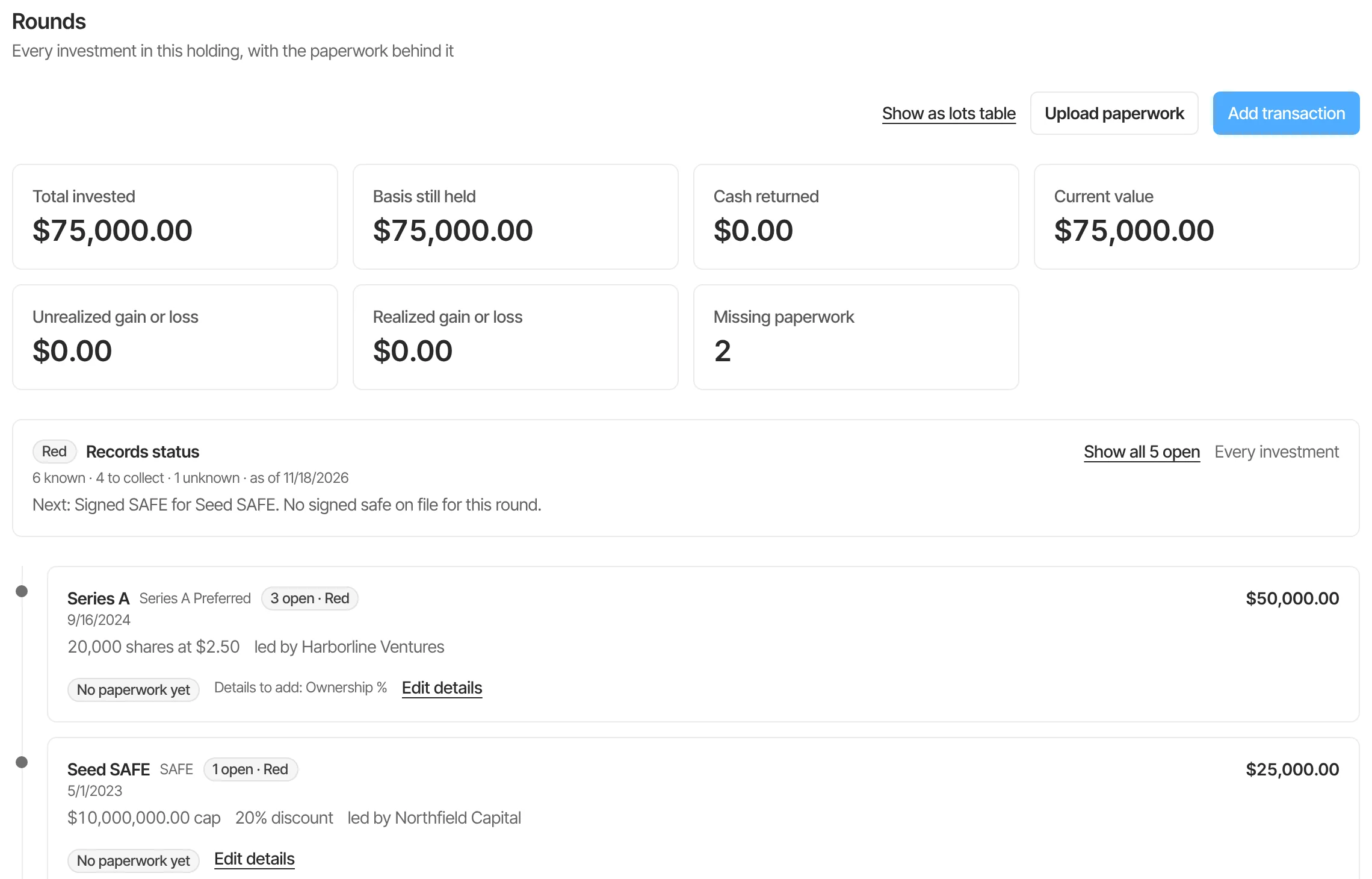
Every round, with the paperwork behind it.
A stake in a private company is kept round by round: the share class, the price or the SAFE’s cap and discount, who led it, and which signed documents are on file. What’s missing is named, round by round.
Cost basis
Basis you can show, not reconstruct.
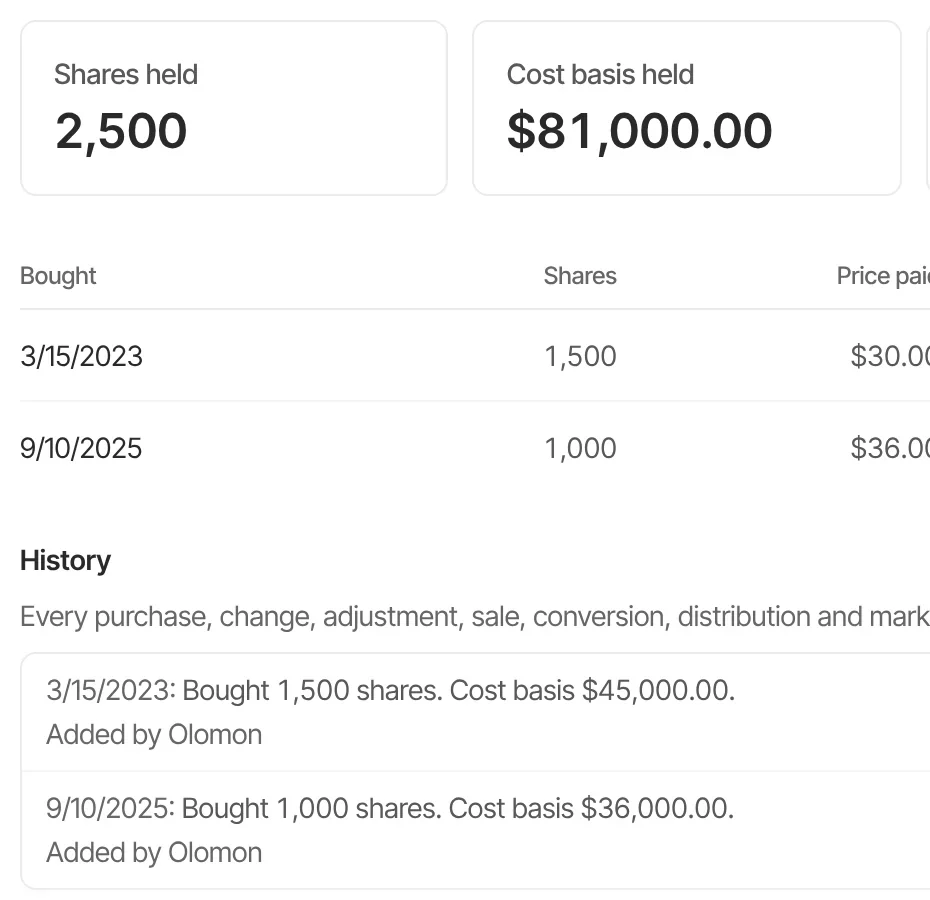
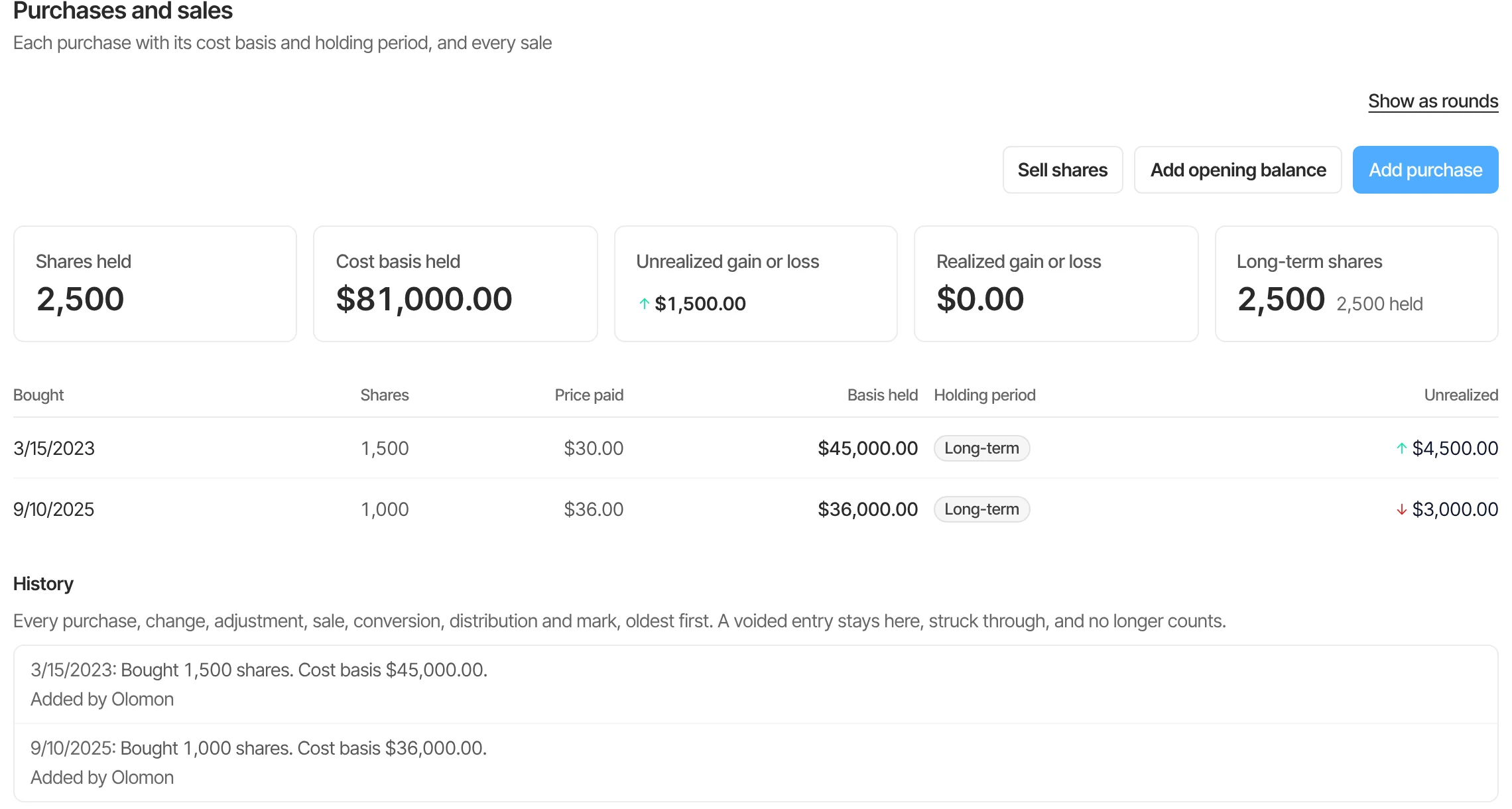
Each holding keeps its lots: when they were bought, what was paid, the basis still held and whether the holding period is long-term. Every purchase, sale, conversion and distribution stays in its history.
A basis ledger for property and other assets
A house or a business interest keeps its own basis:
- The purchase, closing costs and improvements
- Depreciation
- A document behind each entry
- Voided entries kept, struck through, for the history
Sales, gifts and inheritances
Record a sale, gift or inheritance and the asset leaves the balance sheet, with its basis kept. In the same step, decide what happens to each loan tied to it.
Realized gains, by tax year
A tax year’s realized gains, ready to download as a CSV or a PDF.
Income
Income, with its tax character.
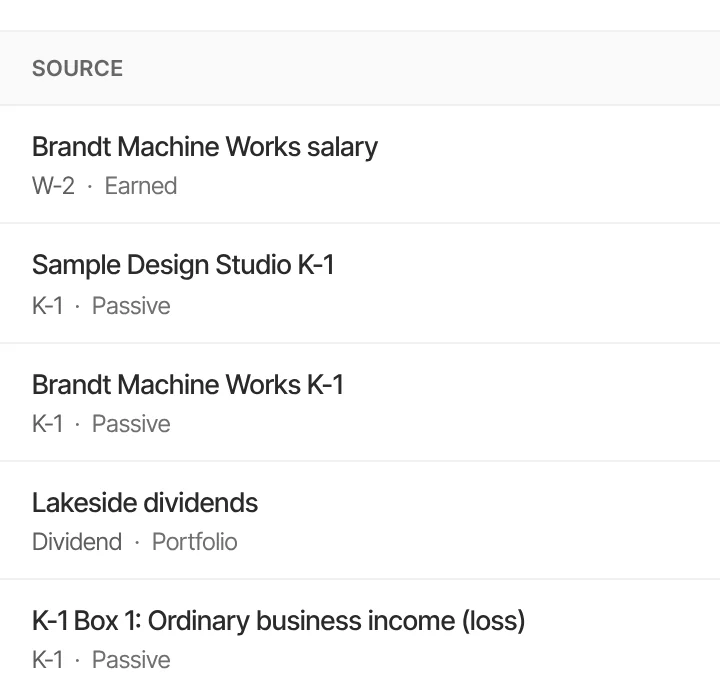
Salary, distributions, rent and other income each carry their tax character: earned, active, passive or portfolio. So the household and its accountant see how the year’s income breaks down before anyone opens a return.
Olomon doesn’t prepare or file returns, and it doesn’t give tax advice. It keeps the record the people who do can trust.
Connected in the record
Tax facts don’t live on their own.
Documents to facts
K-1s, statements and subscription papers are read into proposed values, each beside its page.
Ownership and entities
Each investment sits with the entity or person who owns it, in their share.
Net worth and income
Income from a K-1 or a distribution joins the household's income, with its type.
See a tax year already on the record.
In the demo we walk through a sample household’s expected documents, K-1s and private investments. There’s nothing to send beforehand.