Solutions
Estate and legacy
Walk into the estate conversation with the whole picture.
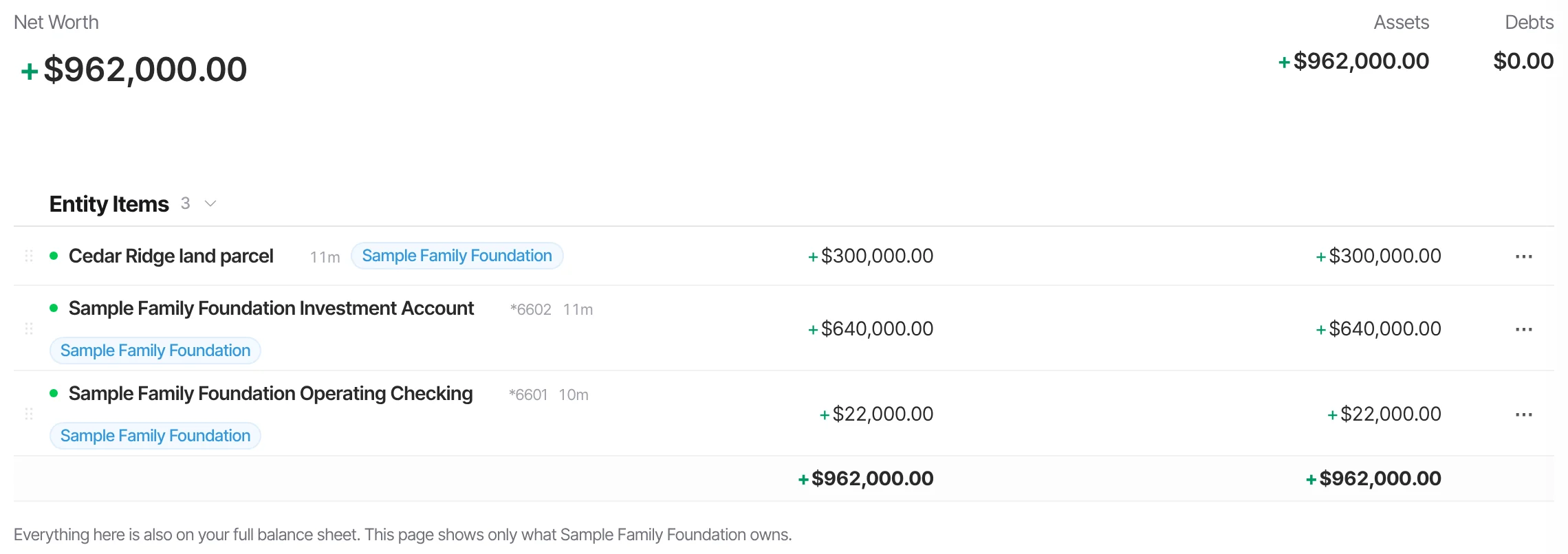
An estate plan is only as good as what the attorney knows about what you own. Olomon keeps who owns what, through which trust or company, in what share, with the paper behind it.
The situation
The first meetings go to finding out what there is.
Before anyone can plan, someone has to gather statements, deeds, policies and operating agreements, then work out how each asset is titled. It’s slow, and it’s where things get missed.
- “Which accounts are in the trust, and which aren’t?”
- “Who owns the business, and in what share?”
- “Who does each life policy name?”
- “What did we pay for the house, and what have we put into it?”
Legal ownership
How each thing is actually held.
Owned jointly, through the trust, or through the foundation, and in what share. Olomon records ownership the way it’s titled, so the attorney starts from the real structure, not a list of balances.
Who owns what
Each holding with its owners and their share
42 Birch Hollow Lane
Primary residence · $785,000
- Avery Q. Sample50%
- Casey L. Sample50%
Cedar Ridge land parcel
Land · $300,000
- Sample Family Foundationentity50%
- Avery Q. Sample50%
Sample art collection
Valuables · $85,000
- Sample Family Trustentity100%
Illustrative view based on Olomon capabilities. Not an actual app screen. Values from Olomon's fictional sample household.
How Olomon helps
From scattered paper to a record the attorney can work from.
Each step uses a different part of the record, and they add up.
Step 1
Map who owns what
Every asset and debt has its owners and their shares. Trusts, LLCs, partnerships and foundations each show what they hold.
Step 2
Bring in the paper
Statements and policies are read into proposed values beside their pages, for a person to accept. Each value keeps its source.
Step 3
Line up the policies
Life policies keep their death benefit and beneficiaries; cash value is its own asset. Beneficiaries that don’t match the trust’s are flagged for your advisor.
Step 4
Keep the basis
Homes and other assets keep a basis ledger, and private investments their paperwork, ready as a snapshot for the estate attorney.
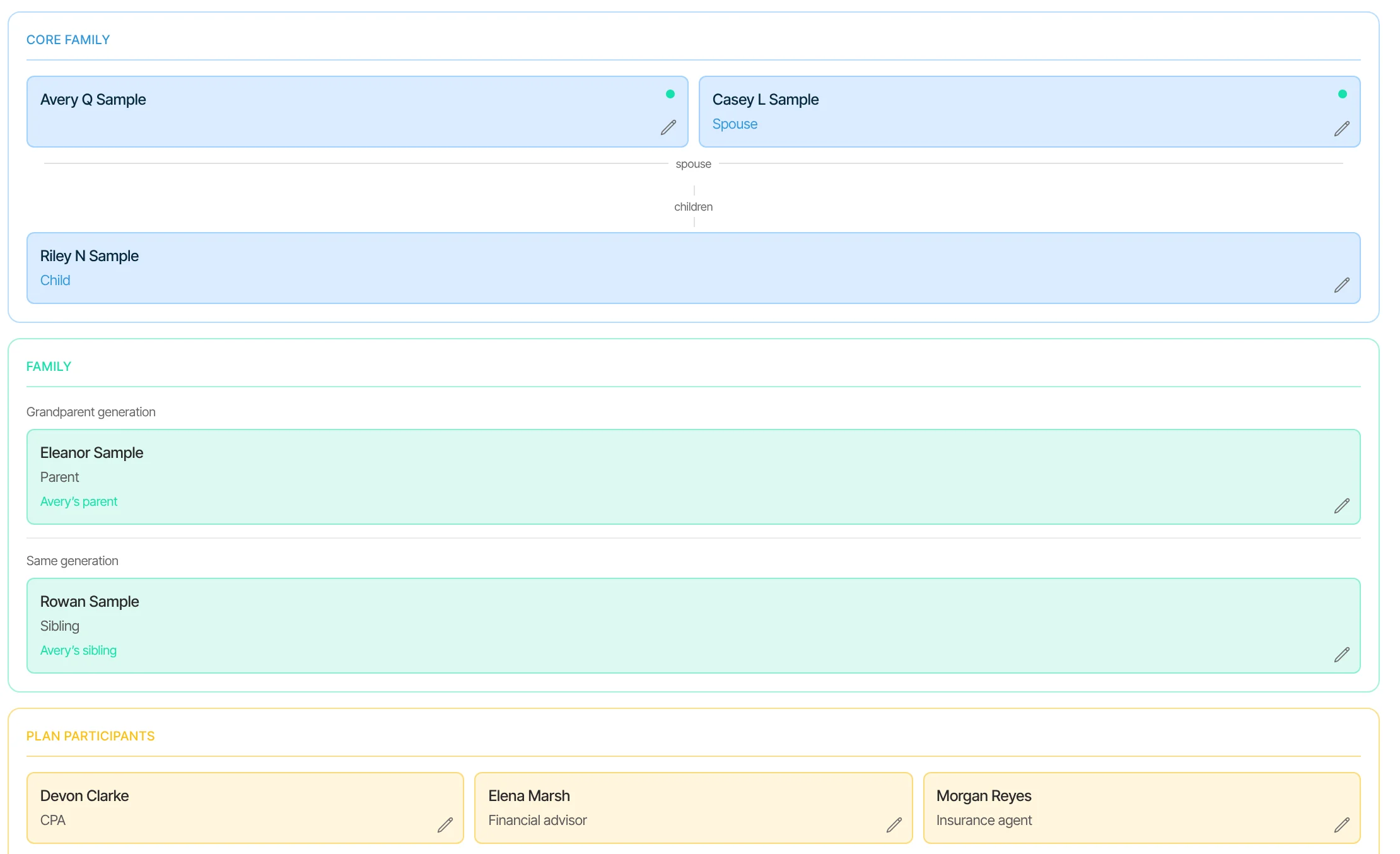
Who’s who, in one view.
The household graph shows the family, the people around it and the professionals who work with it, from any person’s point of view.
What you have
What you bring to the meeting.
Olomon doesn’t draft documents or give legal advice. It keeps the facts your attorney and advisor need, with where each one came from.
- A balance sheet by owner, as a PDF
- Each trust and entity, with what it holds
- A dated snapshot of private investments for the estate attorney
- The attorney invited to one project, such as an estate settlement, without opening the rest
- A legacy contact: if you stop signing in and don’t respond to our check-ins, Olomon sends them your balance sheet, as long as your subscription is active
Built from
The parts of the record this uses.
Ownership and entities
Who owns what, through which entity, in what share?
Insurance and protection
Are we covered, and is anything inconsistent?
Taxes and private investments
Is tax season covered, and is every private investment's paper trail ready?
See an estate picture, already assembled.
In the demo we walk through a sample household’s trusts, entities and policies. There’s nothing to send beforehand.