Solutions
Tax season
Tax season, without the chase.
Every year the accountant asks for the same things, and every year someone hunts for them. Olomon knows what should arrive, notices what’s late, and keeps the answers on the record.
The situation
The same questions, every spring.
K-1s arrive late and one at a time. Brokerage forms come in waves. The accountant needs basis for what was sold and wants to know what’s still missing.
- “Have all the K-1s come in?”
- “Which 1099s are we still waiting on?”
- “What did we sell this year, and at what gain?”
- “What was our basis in that fund?”
One document, all the way through
Follow one K-1 through tax season.
It arrives, it’s read beside its page, it’s matched to the partnership it came from, and it proposes the income it reports. Nothing changes until a person accepts it, and every value points back to the K-1.
Step 1
Read beside its page
A partner's K-1, read into proposed values
Documents to facts
Step 2
Matched to the business
The LLC or partnership it came from
Ownership and entities
Step 3
Proposes income sources
One for each income line, added when the review is accepted
Net worth and income
Step 4
Keeps its source
Each value points back to the K-1 it came from
Evidence and provenance
How Olomon helps
A tax year that assembles itself as the year goes.
Each step uses a different part of the record, and they add up.
Step 1
Know what should arrive
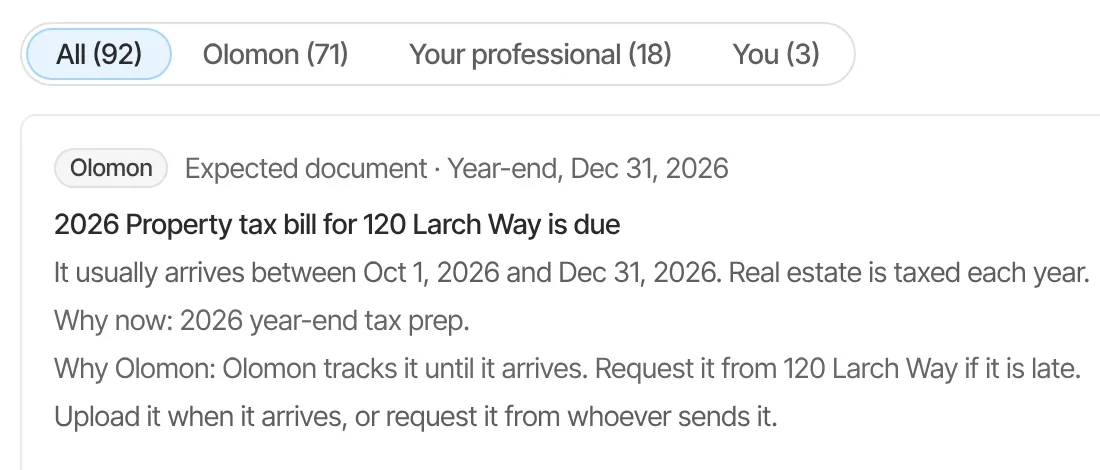
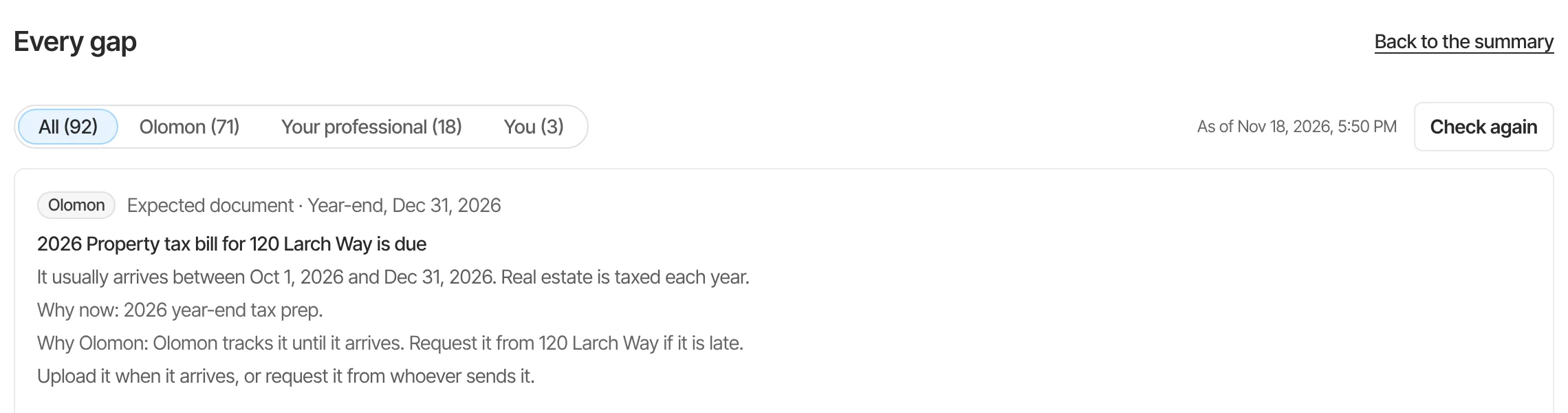
From the accounts, loans, properties and investments on record, Olomon lists the year’s expected forms and marks each not yet due, due, received or late.
Step 2
Read what does
K-1s and statements are read beside their pages and matched to the entity or account they belong to. A K-1 proposes the income it reports.
Step 3
Income, with its character
Each income source carries its tax character: earned, active, passive or portfolio.
Step 4
Gains and basis, ready
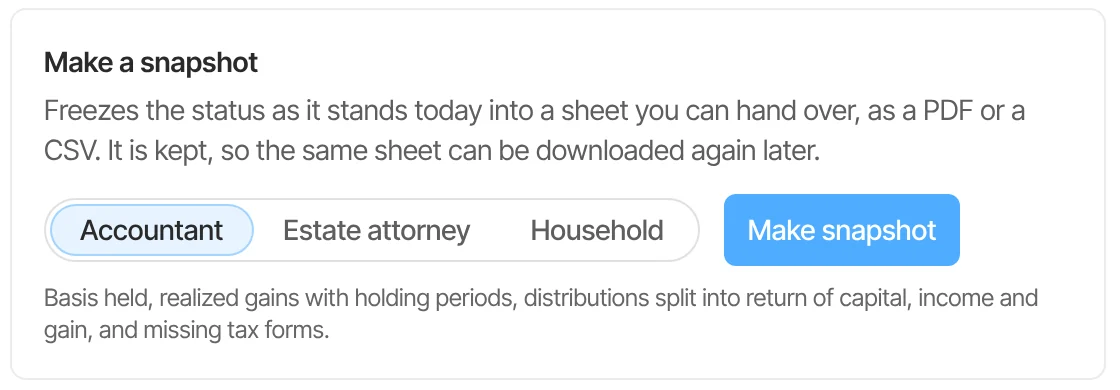
Realized gains by tax year as a CSV or PDF, and a dated snapshot for the accountant with basis, holding periods and missing forms.
One snapshot, handed over.
Freeze where things stand into a sheet for the accountant, as a PDF or a CSV. It’s kept, so the same sheet can be downloaded again later.
What you have
What your accountant gets.
Olomon doesn’t prepare or file returns, and it doesn’t give tax advice. It keeps the record your accountant works from.
- A list of the year’s tax documents, and which are late
- K-1s and statements, each linked to what it belongs to
- Realized gains for the year, as a CSV or PDF
- Basis and holding periods for every lot
- The accountant invited as view only, or to one project, so they can look for themselves
Built from
The parts of the record this uses.
Taxes and private investments
Is tax season covered, and is every private investment's paper trail ready?
Documents to facts
What do our documents actually say, and can we trust it?
Net worth and income
What do we own, owe and earn, and as of when?
See a tax year already on the record.
In the demo we walk through a sample household’s expected documents, K-1s and realized gains. There’s nothing to send beforehand.